For owners · 6 min read ·
The Quiet Kitchen — The Twenty Minutes Before Anyone Orders
A full restaurant and a kitchen with nothing to cook. This page is about the twenty minutes at the start of every meal — the only part of your night that no tool you already own is responsible for.
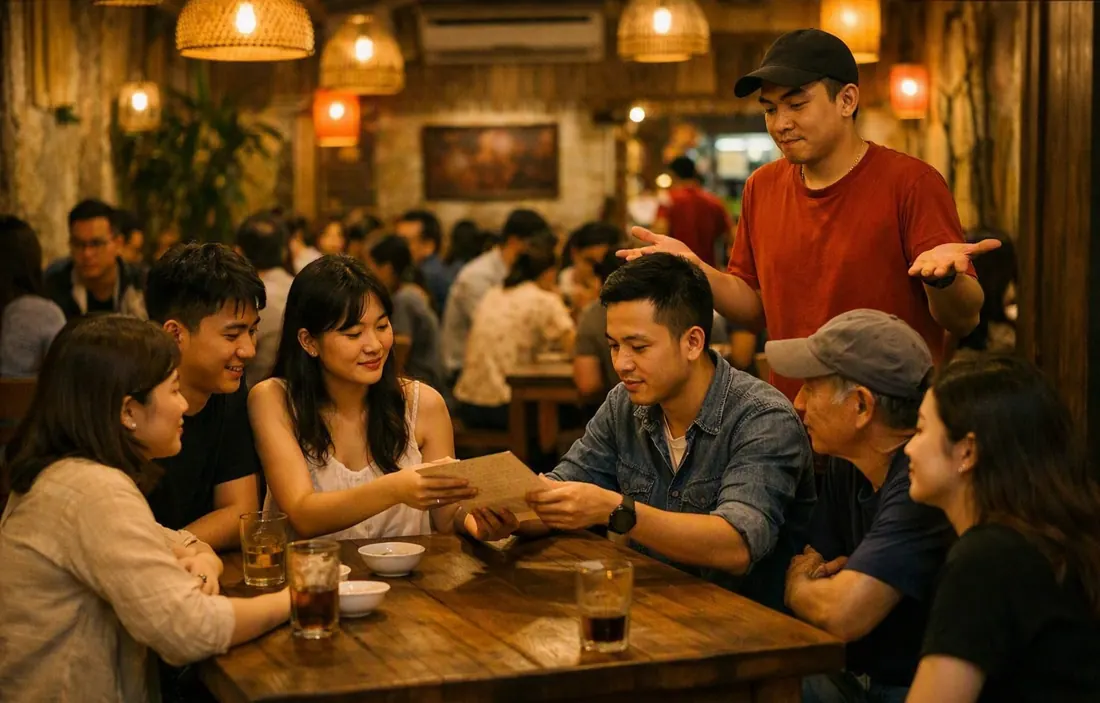
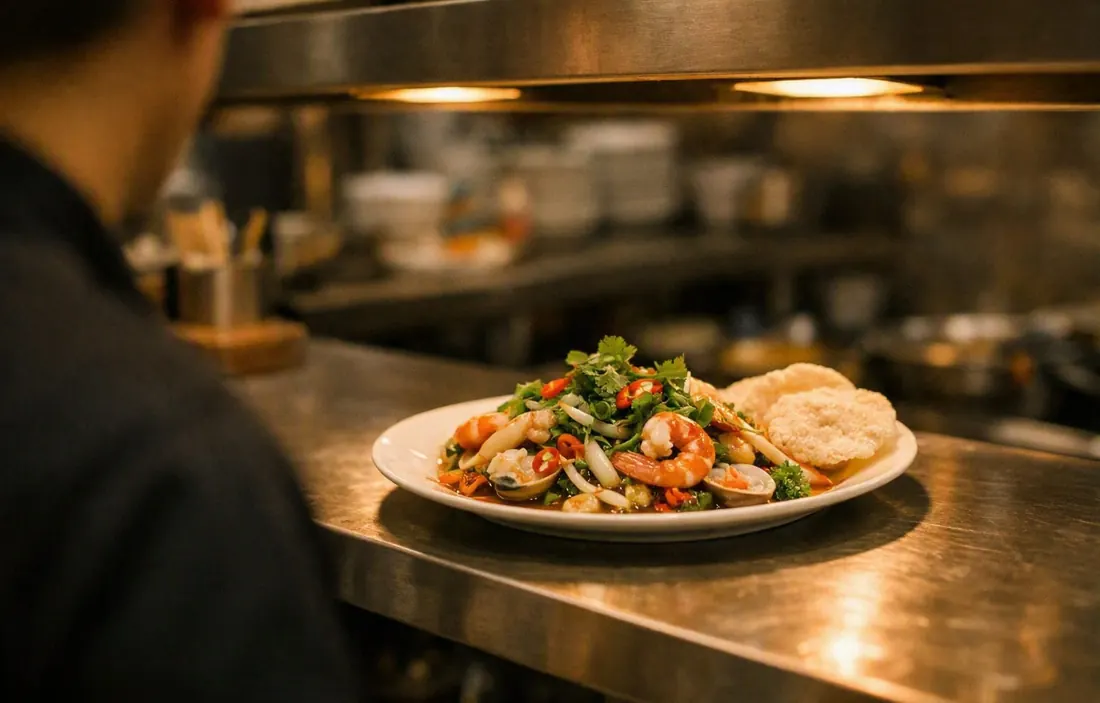
19:30 on a Friday. Every table is taken, there are people waiting at the door, and the pass is empty — not one dish has been fired. Nobody is doing anything wrong; the orders have simply not arrived yet, and until they do, a full room earns exactly what an empty one does.
 Ảnh do AI tạo ra
The quiet kitchen
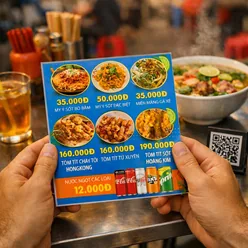
Look at where the time actually goes. A table of six is passing one paper menu around, and the last of them will not see it for another six minutes. A foreign couple photographs a laminated page to run it through a translator, then orders the two dishes they recognised. A waiter has been standing at that table for ten minutes explaining what is in things, while three other tables wave for the bill.
You are not short of customers. You are short of the twenty minutes at the start of every meal — and those twenty minutes are what decides how many times each table turns tonight.
Keep your POS
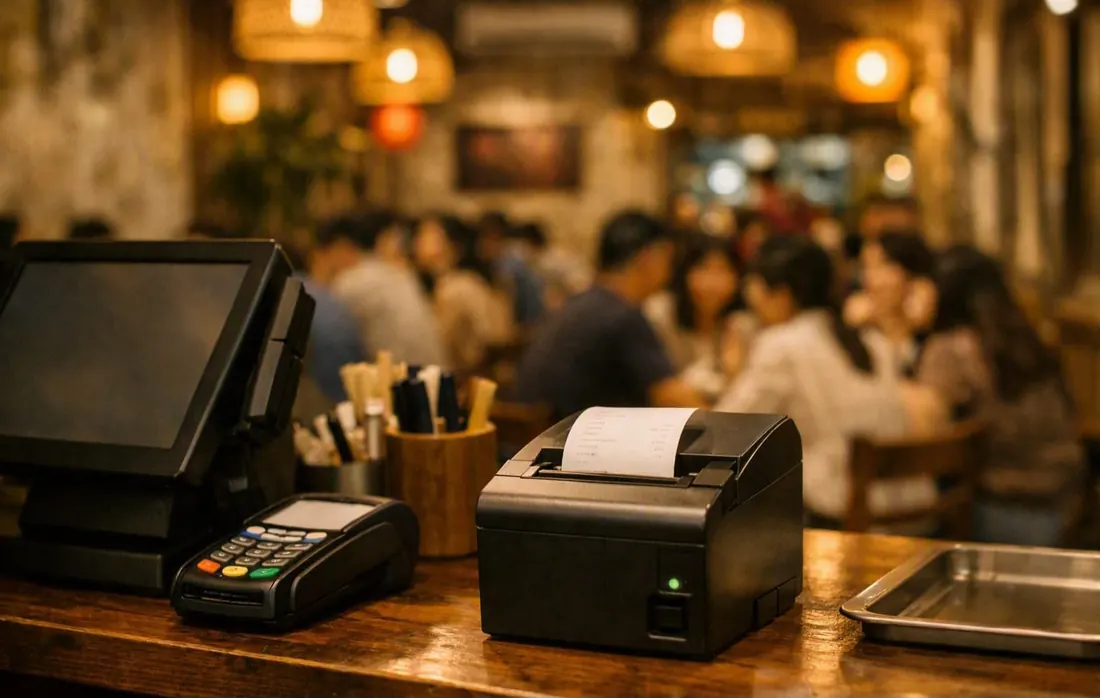
Whatever you use at the counter is good at what it does, and nothing here asks you to replace it. But be precise about what it is: a cash register. It looks backward. It records what has already happened — what was ordered, what was paid, what is in the drawer at midnight.
It cannot take an order in Russian. It cannot sit at a table and wait patiently while a family of eight makes up its mind, then do the same thing in German at the next table. From the moment a guest sits down until a waiter walks to the counter and types the order in, nothing you own is responsible for that order.
That gap is the part we take on — the twenty minutes before your till is ever touched. Closing the bill stays exactly where it is: your machine, your prices, your accounts.
What it costs when it goes wrong
No projections here, and no percentages. Only things that have already happened this month, in some restaurant on your street.
- One dish remade. A “no coriander”, or a word about an allergy, said across a loud room and heard wrong. The first plate goes in the bin, the table waits, and the food cost was yours.
- One table that ordered small. Four foreign guests, and the menu was a wall, so they took the two dishes they could name and left. The seats were full; the ticket was half of what it should have been.
- One waiter worn down. A whole shift of pointing and charades. Good staff rarely leave over pay alone — they leave over shifts like that, and finding and training the next one takes a month.
Against that: 9.700₫ a day. One prevented mistake pays for the month.
And there is the version of this arithmetic you never see: a visitor standing on your street with a phone in his hand, choosing between your door and the one beside it, walks into the restaurant whose menu he can read.
The other ways to get here
Every route below is a real way to end up with a menu foreigners can read. None of them is wrong. They differ in what they take out of you.
| Route | What it really takes |
|---|---|
| A family member who “knows IT” | Weekends. It works on his phone. The other languages come later. When he gets busy, it stops. |
| A developer or an agency | A first meeting, a mockup, one revision round, then another, and a go-live date next quarter — and every question comes back to you. |
| Reprint the menu in four languages | New boards, new lamination, and it is wrong again the first time a price moves. |
| UnivMenu | A photograph. Minutes. |
And we have not even mentioned what any of that costs.
If you want the long version — what a multilingual menu is, section by section — that is the other article.
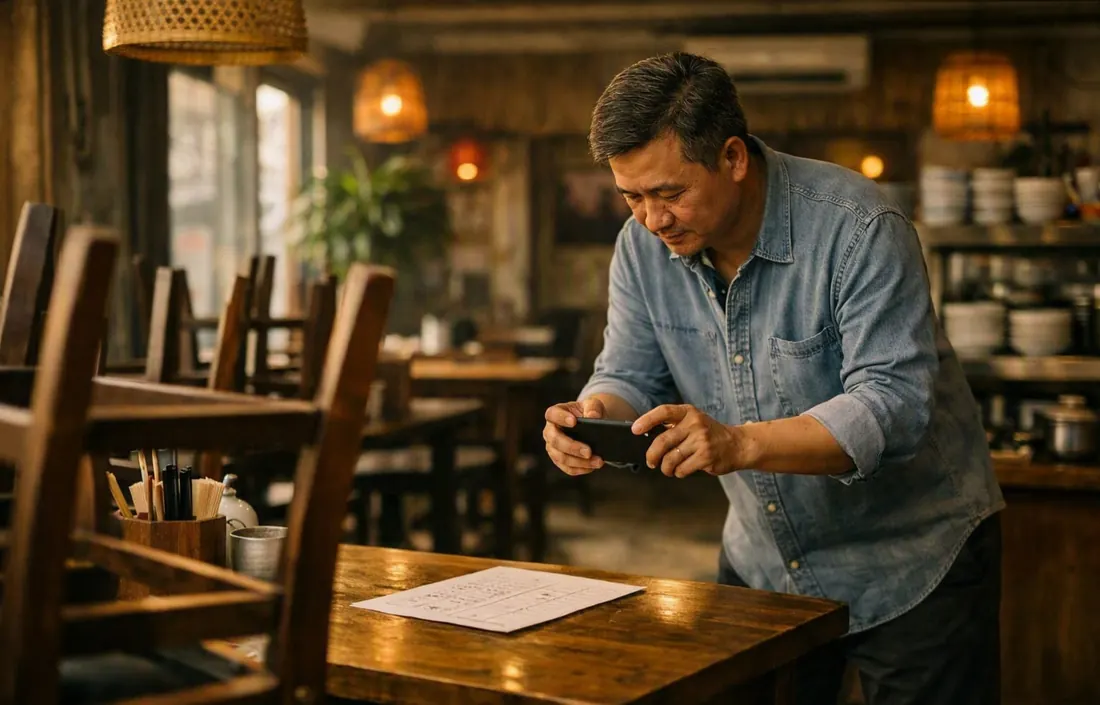 Ảnh do AI tạo ra
What setting up actually is
Here is the whole job, start to finish.
- Register as the owner of your restaurant. An email and a password, and it is yours.
- Photograph your menu — every page, on the phone in your hand.
- Create an account for each member of staff who needs to see orders. Seconds each.
- Print the QR code and put it on the tables.
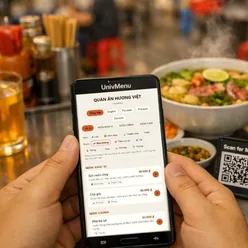
There is no hardware to buy, no app for your guests to download, no training day, nobody we send out to you and no date to book. If you would rather see the result before any of it, open a menu that is already running — a real restaurant, on a real phone, in eight languages.
What this is not
Read this part twice, because it is what we do not do.
- It does not invent customers. It makes the guests already sitting down order with confidence — and order more of your menu than the two dishes they recognised.
- Nothing is pushed to your staff's phone. There is no notification and no alert. The guest builds the order on his own phone and shows a checkout code; your waiter points his own camera at it and the order appears in Vietnamese. No app, no account, no wifi.
- You keep your own till. Closing the bill does not move.
- The free period is claimed, not granted. A restaurant that starts before 30 September 2026 is free until that date, and every menu has 14 days free of its own that finish even if they run past it — and the clock starts when you press the button yourself, not when somebody photographs your menu.
- What is not built yet is not promised here. If it is not on this page, do not count on it.
Through all of it, the kitchen never reads a translation. Every order lands in Vietnamese, because the Vietnamese name of the dish is the one thing that is never translated away.
Send this to your manager
Screenshot this. It can all be done before service.
- Nhận quyền sở hữu menu của quán.
- Chụp toàn bộ menu giấy, không sót trang nào.
- Tạo tài khoản cho từng nhân viên cần xem đơn.
- In mã QR, dán lên bàn.
- Khách ngồi xuống thì chỉ vào mã QR.
Ai cũng làm được, không phải cài thêm gì.
UnivMenu · univmenu.com/blog/the-quiet-kitchen
FAQ
Does this replace my POS?
No — it works in front of it. Your till still closes the bill and still holds your numbers. What we take on is the part before it: the order itself, in whatever language the guest reads, before anybody walks to the counter.
Do my staff need training?
No. There is no app to learn. An account takes seconds to create, the order view is one screen, and reading a guest's checkout code is done with the camera your waiter already uses every day.
Who types the menu in?
Nobody. A photograph of the paper menu you already have is the input — every page, on a phone. Anything that came out wrong you correct yourself afterwards, from your own screen.
What if the wifi drops?
It keeps working. The guest's menu keeps running once the page has loaded, and the checkout code is read by a camera, not over a network. A weak connection at the table does not stop an order.
What does it really cost?
From 9.700₫ a day on the smallest menu, rented by the day and stopped whenever you want. Restaurants that start before 30 September 2026 run free until that date, and their own 14 days finish even if they run past it.
Read this in Vietnamese: Căn bếp im lặng — hai mươi phút trước khi có đơn đầu tiên