UnivMenu

UnivMenu · Operating market

Hong Kong

香港

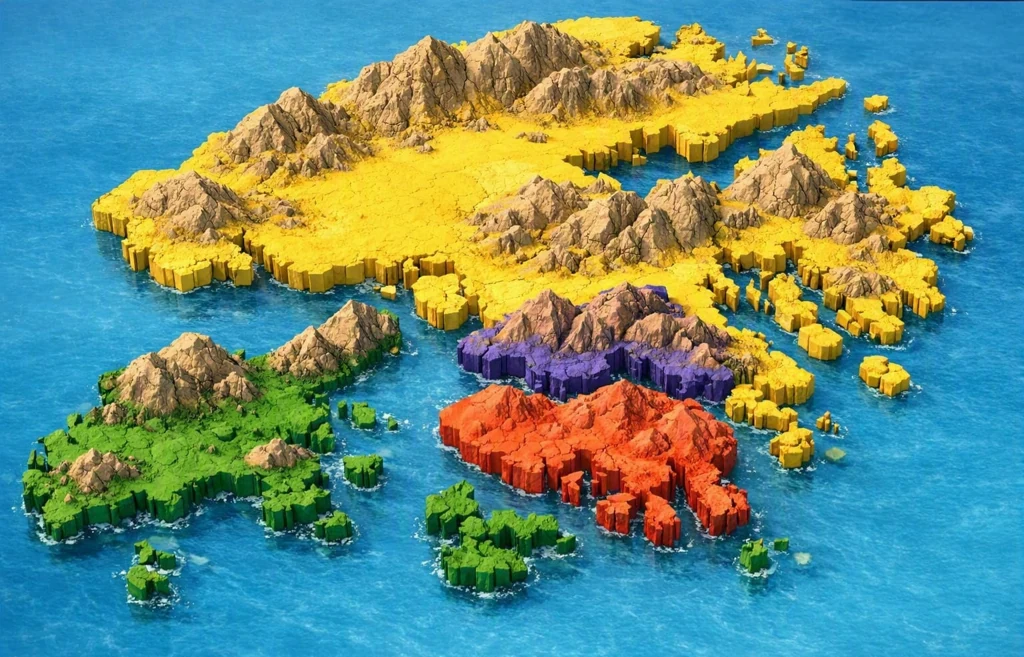
4 areas on the map
One harbour.Four tables.

Hong Kong food is what happens when a Cantonese port spends a century as a British one. The Pearl River delta brought the technique — the wok, the roast meats, the steamed fish. The sea brought the other half. The British century brought tea, evaporated milk, macaroni and an appetite for eating Western at Chinese prices. Then the post-war refugee kitchens took all of it and cooked it fast, cheap, for people with somewhere to be.

That is why one street sells a claypot of rice under cured sausage and, three doors down, a bun with a cold slab of butter in it. Neither is a fusion dish. Both are simply what this city eats.

It is also why a Hong Kong menu is hard to read even if you read Chinese. One page mixes 書面語 — formal written Chinese — with Cantonese contractions whose literal meaning is the opposite of the menu's (走冰 reads "walk ice" and means "no ice"), and English words spelled in Chinese characters. The kitchen knows exactly what all of it means. The visitor holding the menu usually does not.

Create a mockup

Four areas

One harbour, four tables

Hong Kong is never one food city. Pick an area — on the map, or from the list — and see what only that corner puts on the table.

New Territories · 新界

A feast older than the city

Beyond the skyline, in the walled villages and green hills of the north, Hong Kong still cooks the way it did before there was a skyline. Poon choi — the basin feast — arrives piled high in a wooden basin: abalone, roast pork, prawns and shiitake, layered like chapters of village history. It was born at village celebrations, meant to be shared by a whole table. It still is.

On your table

  • Poon choi 盆菜 — the communal basin feast

Kowloon · 九龍

The open-air kitchen

When the neon comes on over Mong Kok and Sham Shui Po, Kowloon starts to sizzle. Follow the steam to a bowl of wonton noodles — springy noodles, plump prawn wontons, a broth simmered from dried flounder. Curry fish balls come straight off the skewer. An egg waffle comes in a paper bag: crisp shell, custardy middle. No reservations, no dress code, eaten standing up.

On your table

  • Wonton noodles 雲吞麵
  • Curry fish balls 咖喱魚蛋
  • Egg waffle 雞蛋仔

Hong Kong Island · 香港島

Skyscrapers above, cha chaan teng below

Under the glass of Central and Wan Chai the island keeps its oldest habits. Tea is pulled between two pots through a cloth filter until it turns to silk. A bun comes out of the oven cracked on top and takes a cold slab of butter. An egg tart — glossy, still trembling — is the city's sweetest full stop. This is where East met West and invented a café of its own: the cha chaan teng.

On your table

  • Silk-stocking milk tea 絲襪奶茶
  • Pineapple bun with butter 菠蘿油
  • Egg tart 蛋撻

Outlying Islands · 離島

Where the tide writes the menu

Thirty minutes by ferry, the city's roar drops to water lapping against stilt houses. On Lantau, Lamma and Cheung Chau dinner is decided by the morning catch — crab, prawns and clams, steamed with ginger and spring onion, because when the sea is this generous you need to do very little else.

On your table

  • Steamed crab, prawns and clams 蒸蟹、蝦、蜆

Five things a menu will not tell you

Names that mean something else

Every one of these is a real line on a real Hong Kong menu, and every one of them reads wrong in a dictionary.

The silk stocking is not a stocking

絲襪奶茶 means "silk stocking milk tea", and there has never been a stocking in it. The tea is pulled back and forth between two pots through a fine cloth filter; after a few hundred cups the cloth is stained tea-brown and worn thin, and it looks like one. The name is the method — and the method is why the tea comes out smooth enough to carry evaporated milk.

走冰 does not mean "walk ice"

It means no ice — and the drink still arrives cold. It belongs to a family of Cantonese verb-object contractions where the literal reading is wrong and the menu reading is fixed. Translated word by word, every one of them comes out backwards.

On the menu

走冰no ice走甜no sugar少甜less sugar加底extra rice or noodles

A poon choi is eaten from the top down

The basin is layered so the richest juices sink: roast meats and abalone on top, radish, tofu puffs and cabbage underneath, tasting by the end of everything that sat above them. It was born at celebrations in the walled villages of the New Territories, and it is still a dish you order for a table, never for yourself.

The cha chaan teng exists because Hong Kong wanted Western food at Chinese prices

Post-war, Western restaurants were for expatriates and priced that way. The cha chaan teng answered with the same idea on a working wage: milk tea, macaroni in soup, a fried egg on rice, and a bun with a cold slab of butter. Seventy years on it imitates nothing. It is the city's own canteen.

The egg waffle came from cracked eggs

The story every stall tells: a grocer with a crate of broken eggs and no way to sell them mixed them into a batter and poured it into an iron of half-spheres. 雞蛋仔 — "little eggs". Crisp shell, soft middle, sold in a paper bag and eaten walking.

The four area pictures and the five illustrations on this page are AI-generated. They are not photographs of any particular restaurant.

Two ways in

Run a restaurant in Hong Kong?

Photograph your menu. Your guests read it in their own language and order from it; your kitchen keeps reading Chinese.

See how it works

Just here to eat?

Start at the front page and follow a menu.

Start here