Allergies · 4 min read ·
Vietnam Food Allergy Guide: How to Eat Safely (With a Printable Allergy Card)
You can eat brilliantly in Vietnam with a food allergy — but you need a plan. The cuisine is delicious, fresh, and often cooked to order, which is good news. The bad news is that a few allergens are so deeply embedded in the cooking that "no peanut" or "no shellfish" is harder to guarantee than it sounds.
This guide walks through the allergens to watch, why they're tricky, and exactly how to communicate a serious allergy to a Vietnamese kitchen — including a printable card you can carry.
The hidden allergens in Vietnamese cooking
Four ingredients do most of the damage for allergic travellers:
- Peanut (đậu phộng). Used whole, crushed as a garnish, and in sauces. It appears on dishes you wouldn't expect — sprinkled over noodles, in fresh spring rolls, in some broths.
- Shellfish and shrimp (tôm, hải sản). Shrimp paste (mắm tôm) and dried shrimp are flavour bases in many dishes. They can be present even when you can't see them.
- Fish (cá) — specifically fish sauce (nước mắm). This is the big one. Fish sauce is the salt of Vietnamese cooking. It's in marinades, dipping sauces, broths, and stir-fries. A "vegetable" dish is very often seasoned with it.
- Egg (trứng) and gluten. Egg appears in noodles and batters; gluten in soy sauce, seitan, and wheat noodles.
If your allergy is severe, treat any dish you haven't confirmed as a risk.
Why "no peanut" is harder than it sounds
Two reasons. First, hidden forms: peanut oil, crushed peanut in a sauce, or a garnish added at the end. Second, cross-contact: a busy street kitchen uses the same wok, the same oil, and the same utensils for many dishes. Even if a dish doesn't contain peanut by recipe, it may be cooked in the same pan as one that does.
This is why a verbal "no peanut" to a server who speaks limited English is not enough. You need the message to reach the kitchen clearly, and you need to assume cross-contact is possible.
How to communicate an allergy to a Vietnamese kitchen
The most reliable method is a written card in Vietnamese that states your allergy plainly and asks the kitchen to confirm whether a dish is safe. Show it before you order, point to the relevant dishes, and let staff tell you what's possible.
A good allergy card says three things:
- What you cannot eat (in Vietnamese).
- That the reaction is serious (so it's taken seriously).
- A request to confirm before cooking.
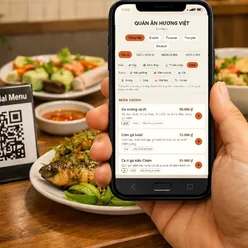
This is exactly the problem a multilingual QR menu helps with. On a UnivMenu menu, you can tap an allergen under "Avoid" — peanut, shellfish, fish, egg, dairy, gluten, and more — and every dish containing it is hidden from your view. The menu also carries a bilingual advisory line reminding you to confirm with staff, because no digital menu replaces a direct conversation about a serious allergy.
You can see the filter in action on a real menu here: see a live menu.
Your printable Vietnamese allergy card
Carry this on your phone (or print it). Show it to staff before ordering.
Tôi bị dị ứng nghiêm trọng với: ____________ (I have a severe allergy to: ____________) Nếu ăn phải, tôi có thể bị phản ứng nguy hiểm đến tính mạng. (If I eat it, I may have a life-threatening reaction.) Món này có chứa ____________ hoặc được nấu chung với nó không? Vui lòng xác nhận trước khi nấu. Cảm ơn! (Does this dish contain ____________, or is it cooked with it? Please confirm before cooking. Thank you!)
Fill the blank with your allergen: đậu phộng (peanut), tôm / hải sản (shrimp / shellfish), cá / nước mắm (fish / fish sauce), trứng (egg), sữa (dairy), gluten.
Important: This card is a communication aid, not a guarantee. Always confirm directly with staff, and assume cross-contact is possible in a shared kitchen.
Restaurants that already speak your language
The easiest option is to eat at restaurants that already offer a multilingual QR menu with allergen filters — you can read every dish in your own language and filter out your allergen before you even speak to staff.
And if you find a great local restaurant that doesn't have one yet, you can create a free multilingual menu for them in minutes — and earn a recurring finder reward if they activate it. create a free menu mockup
FAQ
Is Vietnamese food safe for people with allergies?
It can be, with planning. Vietnamese food is fresh and often cooked to order, which helps. The risk is that peanut, shellfish, and fish sauce are used pervasively, and cross-contact in a busy kitchen is common. Always confirm a dish with staff before ordering.
Does Vietnamese food contain peanuts?
Often, yes. Peanuts appear whole, crushed as a garnish, and in sauces — sometimes on dishes you wouldn't expect, such as fresh spring rolls and some noodle dishes. If you have a peanut allergy, treat any unconfirmed dish as a risk and use a written allergy card.
How do I tell a Vietnamese restaurant about my allergy?
Show a written card in Vietnamese that states your allergy, explains the reaction is serious, and asks the kitchen to confirm before cooking. A digital menu with an "avoid" filter also helps you hide dishes containing your allergen before you order.
Is there fish sauce in everything in Vietnam?
Nearly. Fish sauce (nước mắm) is the universal seasoning — in marinades, broths, dipping sauces, and stir-fries. Even dishes that look plain or vegetable-based are often seasoned with it. This matters for allergies, vegetarians, and some religious diets.
Can I eat in Vietnam with a shellfish allergy?
Yes, but carefully. Shrimp paste (mắm tôm) and dried shrimp are flavour bases in many dishes and can be present even when invisible. Confirm every dish, avoid stocks and pastes you can't verify, and carry a shellfish allergy card in Vietnamese.
Read this in Vietnamese: Ăn hàng quán an toàn khi bị dị ứng: hướng dẫn cho bạn và cho con